
Amid the wave of smart buildings and energy-saving retrofits, LoRa thermostats are rapidly emerging as an ideal control terminal for air conditioning and heating systems in large public buildings, hotels, and residential spaces, thanks to their unique wireless communication advantages. They effectively address the pain points of traditional wired thermostat systems—complex wiring and high retrofit costs—paving a new path for building energy management.
Core Technology: The Perfect Combination of Long Range and Low Power
LoRa (Long Range Radio) is a low-power wide-area network (LPWAN) communication technology whose core strengths lie in spread spectrum modulation, delivering exceptional receiver sensitivity and interference immunity. Applied to thermostats, this technology achieves three key breakthroughs:
- Ultra-Long Range and Strong Penetration: LoRa can achieve transmission distances of over 3 kilometers in line-of-sight conditions, with a single gateway covering multi-story buildings. Its signals perform exceptionally well in complex building environments, penetrating walls and floor slabs—field tests show coverage typically extends up to five floors above and below, significantly reducing the need for repeaters and gateways.
- Ultra-Low Power Consumption: Receive current is typically below 5mA, while sleep current can drop to microamp levels, supporting battery-powered solutions for installations where AC power is unavailable.
- Strong Anti-Interference: Combining digital spread spectrum with forward error correction coding, LoRa maintains stable communication even in environments congested with 2.4GHz band signals.
Core Functions: From Precision Temperature Control to Intelligent Management
LoRa thermostats are not merely temperature-regulating terminals; they serve as critical nodes in building energy management systems, equipped with a rich set of intelligent capabilities:
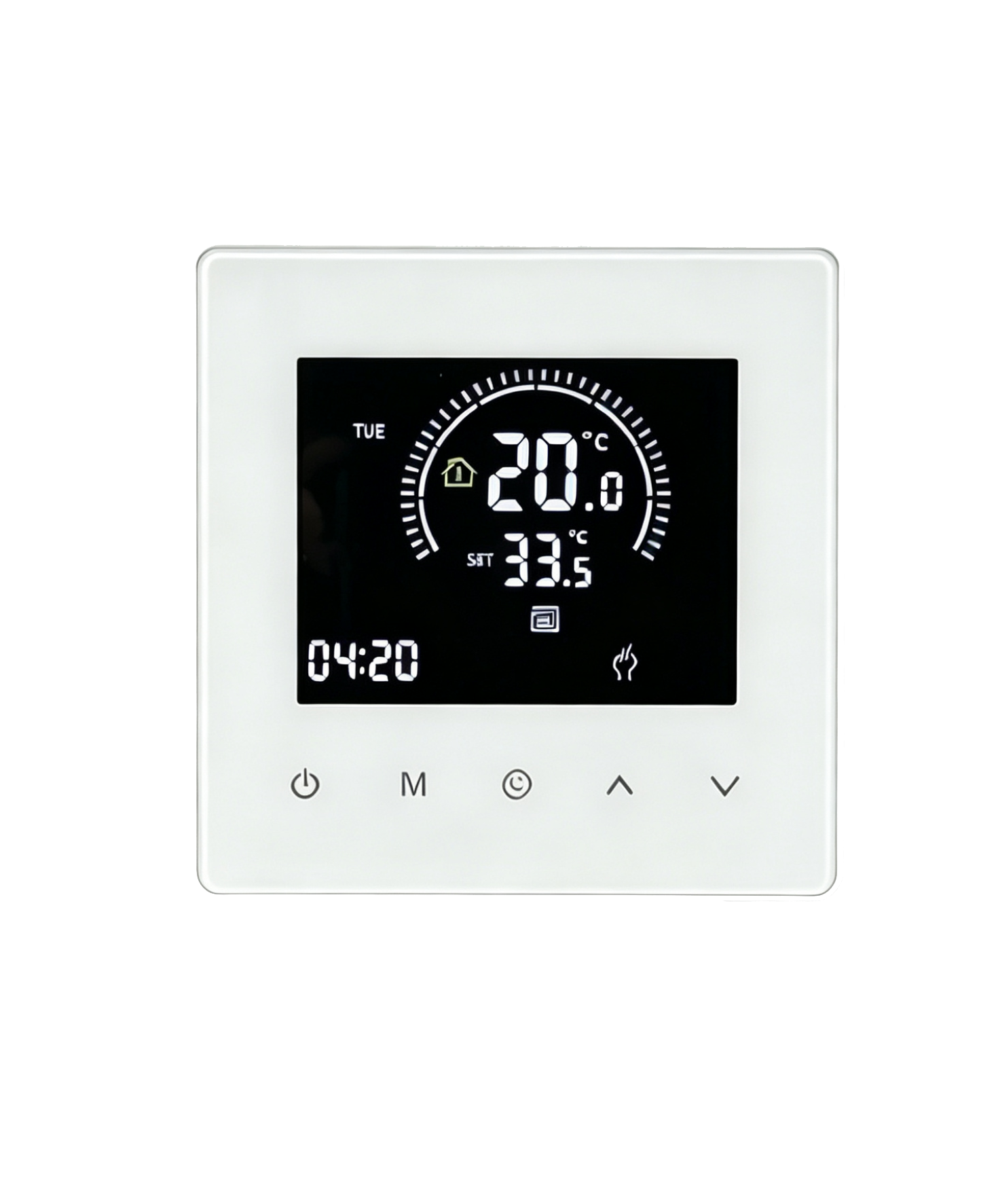
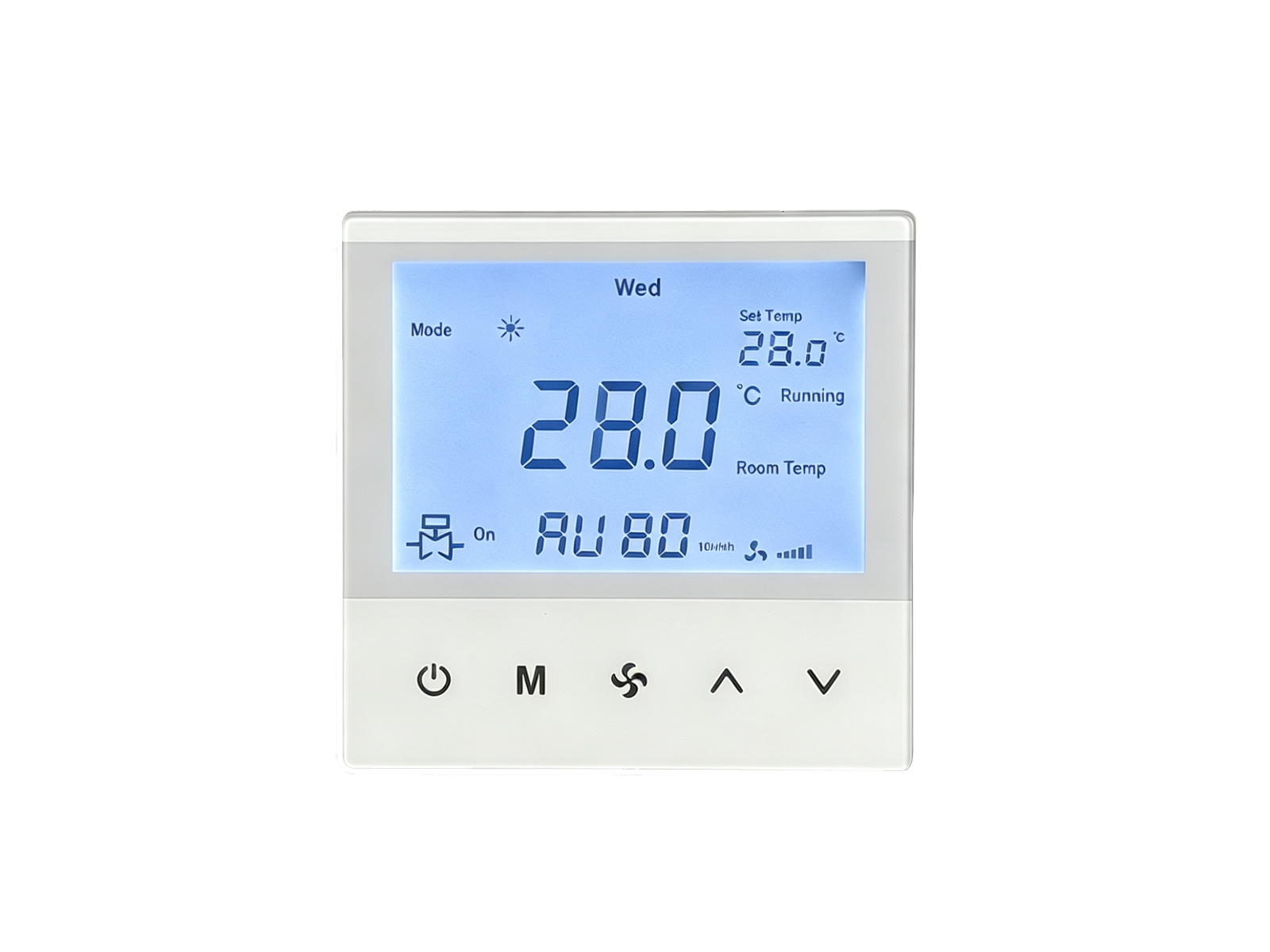
- Precision Temperature Control & Multi-Mode Operation: Built-in high-precision NTC temperature sensors achieve control accuracy of up to ±0.5°C. Support for cooling, heating, fan-only, and auto modes, along with practical features like scheduled timers and low-temperature freeze protection.
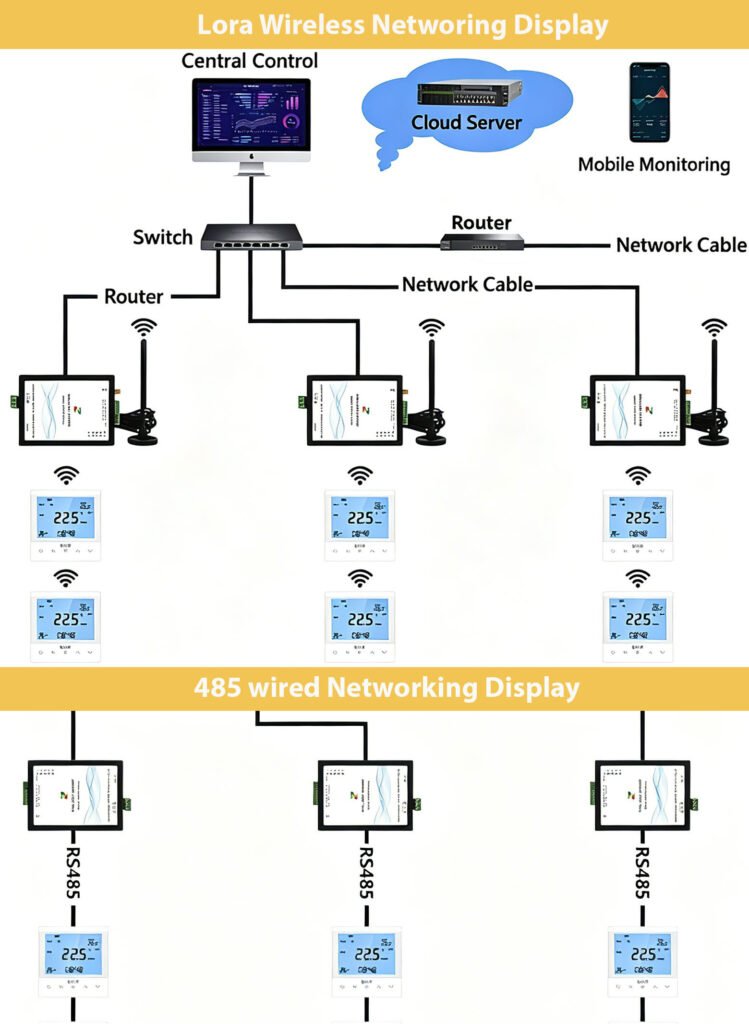
- Remote Centralized Management: Connected to a cloud platform via LoRa gateways, managers can use mobile apps or web dashboards to perform group management, batch control, and scheduled policy configuration on thermostats distributed across different zones. For example, turning off all air conditioning on an entire floor with a single click, or setting automated weekday start/stop schedules.
- Operational Monitoring & Energy Metering: Real-time collection of data including fan coil runtime, water valve status, indoor temperature and humidity, providing data support for on-demand energy supply, consumption statistics, and sub-metering for billing.
- Flexible Networking & Scalability: Supports star or mesh network topologies. Some products feature relay functionality, allowing each panel to serve as a routing node, effectively extending communication range and addressing signal blind spots in complex buildings.
Application Scenarios: Addressing Industry Pain Points Head-On
The wireless nature of LoRa thermostats gives them a significant edge in the following scenarios:
- Existing Building Energy Retrofits: For projects such as office buildings, hotels, and hospitals where large-scale rewiring is impractical, LoRa solutions enable wire-free, rapid deployment, shortening construction cycles by over 70% and reducing retrofit costs by approximately 40%. The China Academy of Information and Communications Technology (CAICT) research building retrofit project adopted this solution, achieving remote centralized control over 616 fan coil units without damaging existing interior finishes.
- Decentralized Multi-Equipment Management: In campuses, industrial parks, retail chains, and similar scenarios, LoRa thermostats enable unified monitoring and energy management of geographically dispersed air conditioning equipment.
- Smart Homes & Long-Term Rental Apartments: Supports integration with occupancy sensors, door/window magnets, and other sensors to enable automated energy-saving scenarios such as “auto-shutoff when unoccupied” and “pause cooling/heating when windows open,” while also interfacing with room card systems for streamlined rental management.